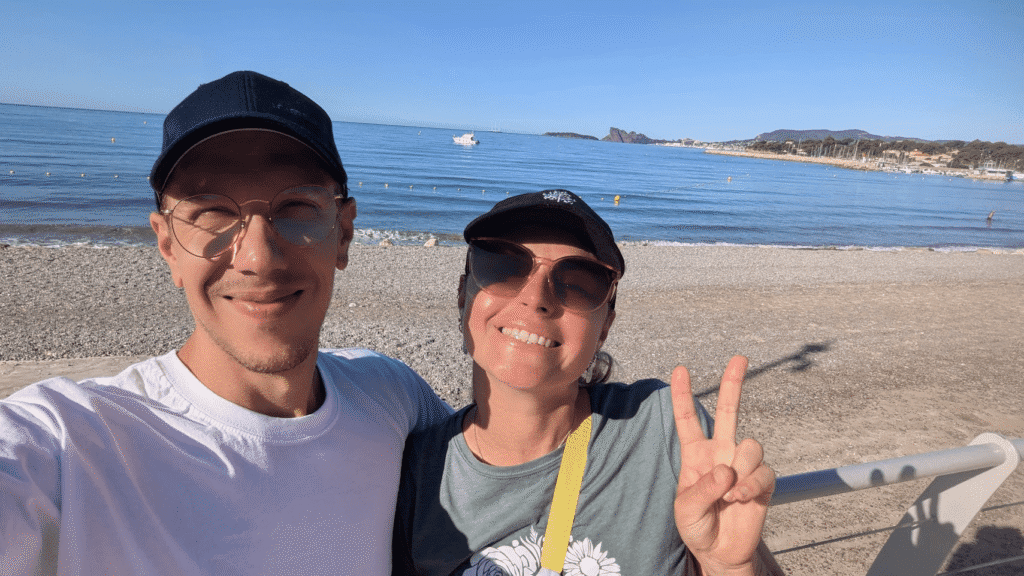
At the beginning of September, we set off for the Var Ouest with a simple idea in mind: to try out a road trip in a roof-tent over several days, in wild 100 % mode. Between hilltop villages and Mediterranean beaches, Island of Porquerolles, With its combination of coastal paths and more or less comfortable overnight stays, this trip was much more than a simple seaside getaway.
This is not a postcard article.
It's an honest account of our experience: the pleasant surprises, the disappointments, the constraints of bivouacking on the coast, the actual budget, and above all what we learnt from this trip for the future.
If you're thinking of a roof tent on the Côte d'Azur, or a road trip in the Var, here's what we'd like to have read before setting off.
Day 1 - Between expectations, sea breezes and a (very) turbulent night
First stage: Bandol
We start in Bandol, which I remember as a charming little town.
In reality? Big disappointment.
Perhaps I had idealised the place, influenced by the reputation of Bandol wines (particularly its highly acclaimed rosés, which I particularly like). In my mind, it was all Mediterranean postcards, authenticity and a gentle way of life.
On site, the atmosphere leaves us more neutral than charmed.
There is a free car park close to the centre (a good point - for your information, it's called Parking Deferrari), and then we stroll leisurely through the streets before settling into the restaurant.
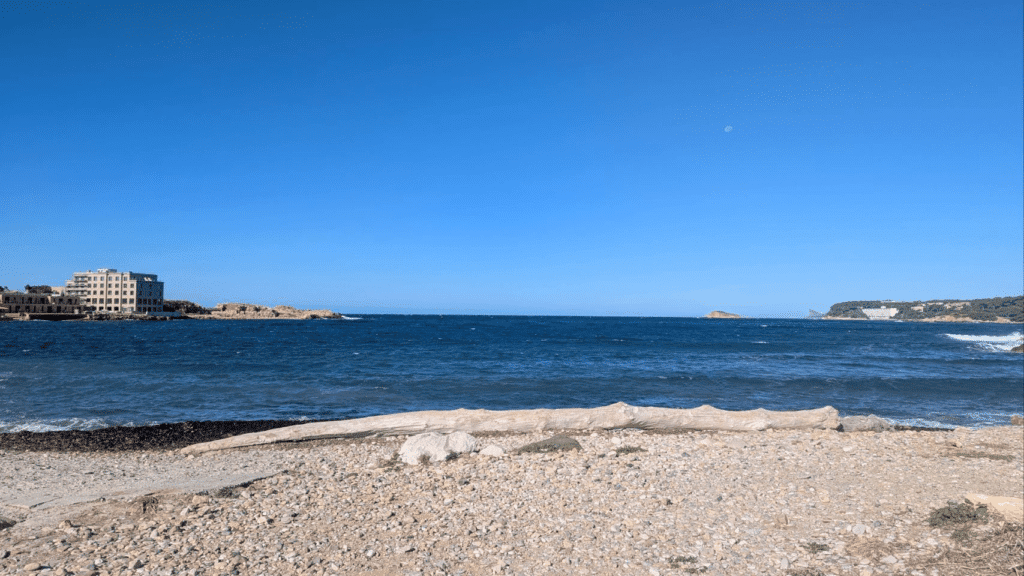
And then... a classic scam: a “burrata” that turns out to be just a mozzarella.
It's not dramatic, but it does add to the general impression that Bandol clearly doesn't give a damn.
The wind is already quite strong. Impossible to envisage a pleasant break by the sea. So we're back on the road.
Second stop: between Six-Fours and Sanary
We then head for Six-Fours-les-Plages, more precisely between Six-Fours and Sanary-sur-Mer.
The objective is simple:
relax on the beach, take a breather and enjoy a siesta after an early start.
Except that the wind is still as violent as ever.
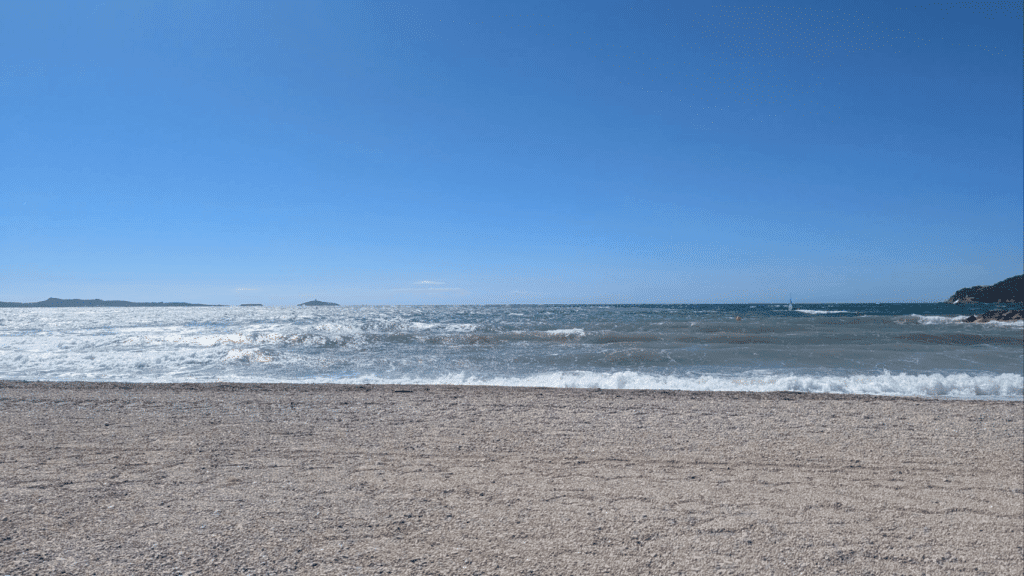
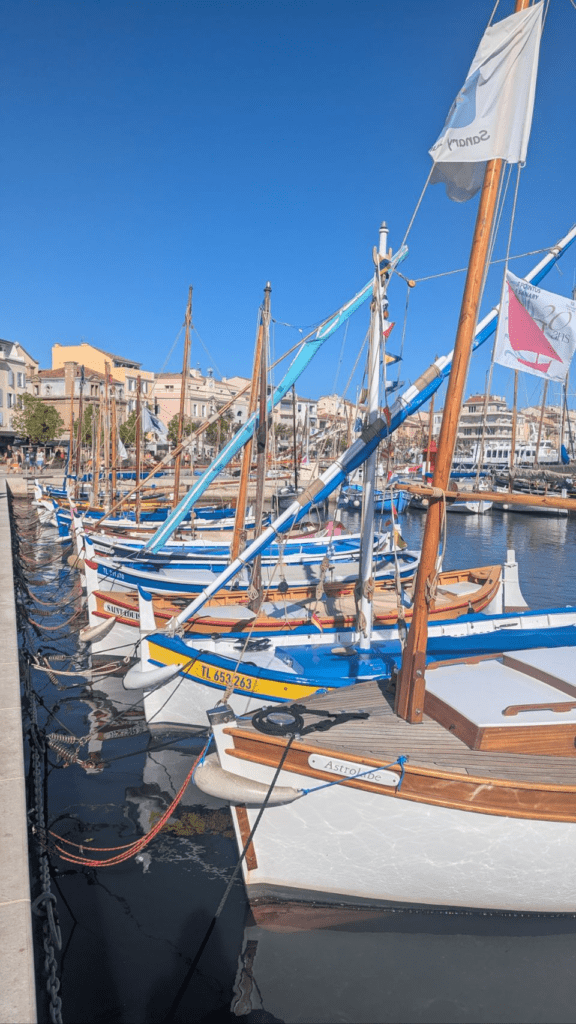
With the sea spray in your face and the sand whipping your legs, it's impossible to really relax. We gave up on the idea of a siesta and opted for the more pleasant option of strolling around Sanary-sur-Mer.
This time it was a pleasant surprise: the port is lively, the alleyways are pretty, and you can walk for a long time without seeing the time go by. It's simple, but pleasant.
Heading for the Giens peninsula
In the late afternoon, we set off for the Presqu'île de Giens.
The next day, we plan to visit the islands of Porquerolles. So the idea is strategic:
- locate the ferry departure point,
- find free parking,
- and ideally sleep on site to avoid having to drive all over again in the early hours of the morning.
First problem: an accident on the only access road.
Result: a huge traffic jam. And as there's only one lane for traffic, if there's a blockage... everything comes to a standstill.
Once on the peninsula, we scout around Tour Fondue, from where the ferries leave for Porquerolles.
There are several pay car parks close to the pier.
But if you arrive early enough, you may be able to find a free seat on Avenue de l'Estérel, above the Tour Fondue campsite.
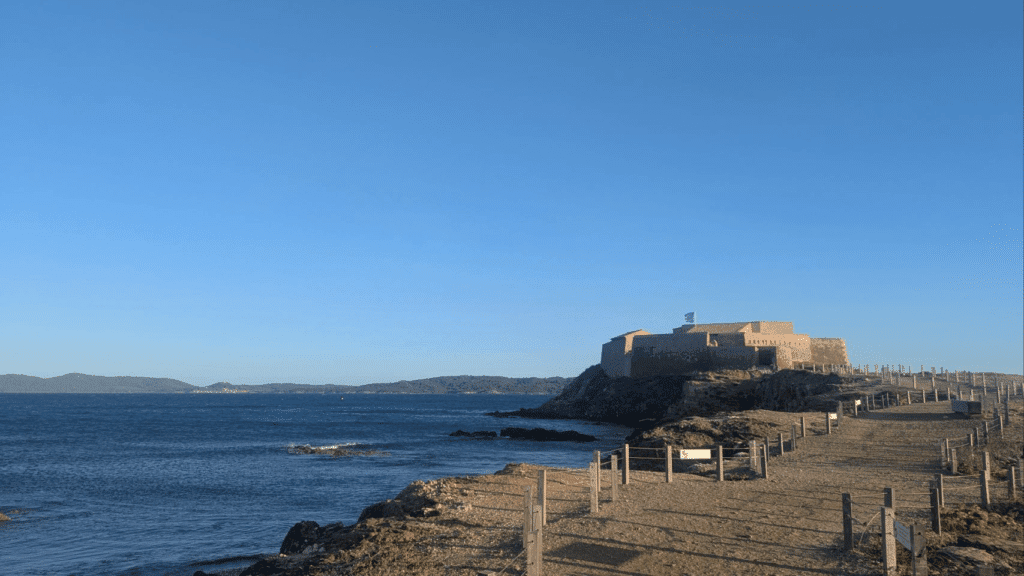
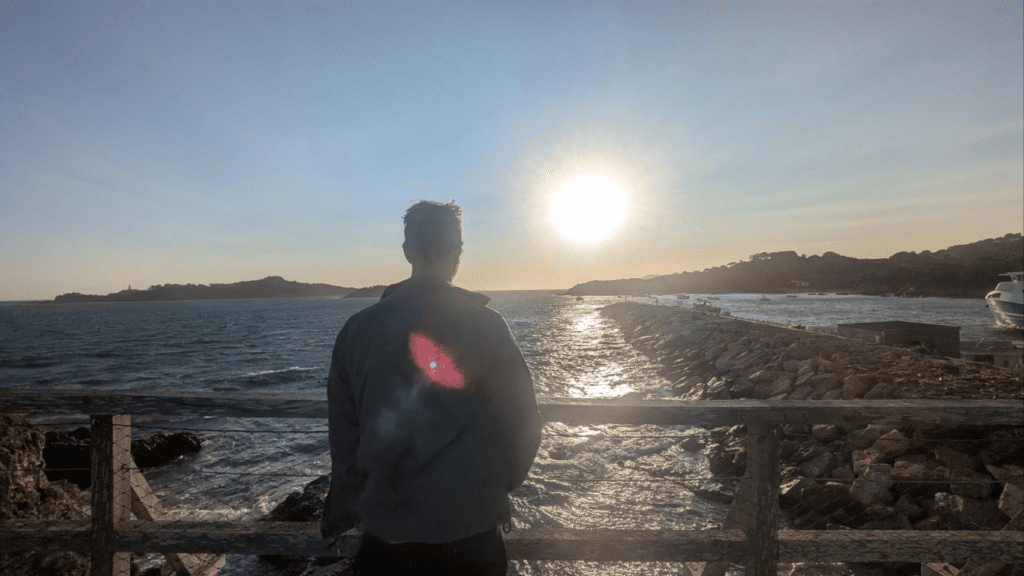
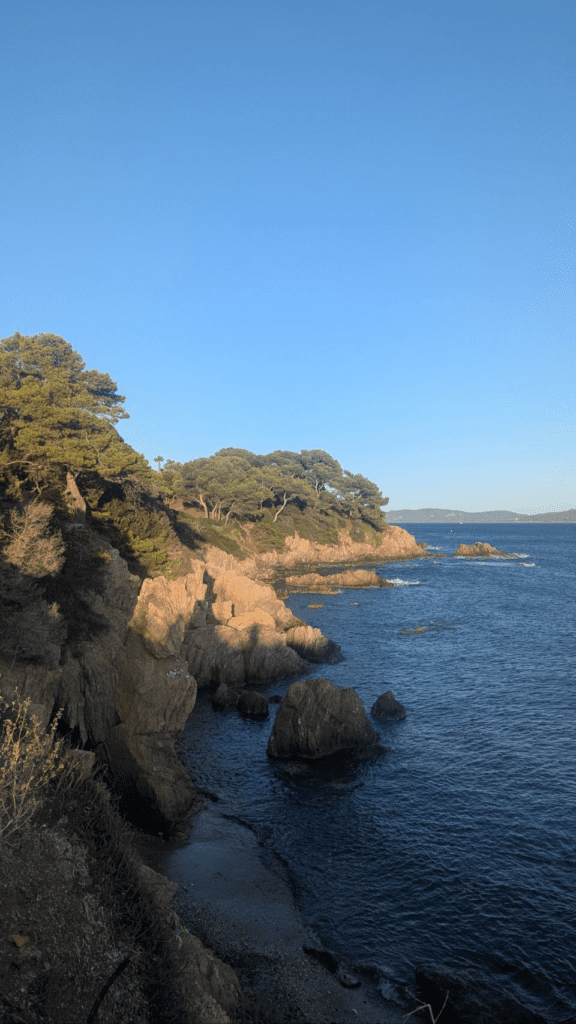
So we identify our plan for the next day.
Improvised pizza and false hope of a wild spot
We weren't supposed to eat in the evening.
In the end, we settled for a pizza right next to the Tour Fondue, waiting for nightfall so we could get some sleep.
I had read that freedom camping was banned on the peninsula.
But a shopkeeper assures us that there are “very wild” corners where you can settle down without worry.
Spoiler: no.
We turn, we look, we spot.
a few vans, but very few options adapted to a roof tent. Clearly, the layout of the site favours more discreet vehicles.
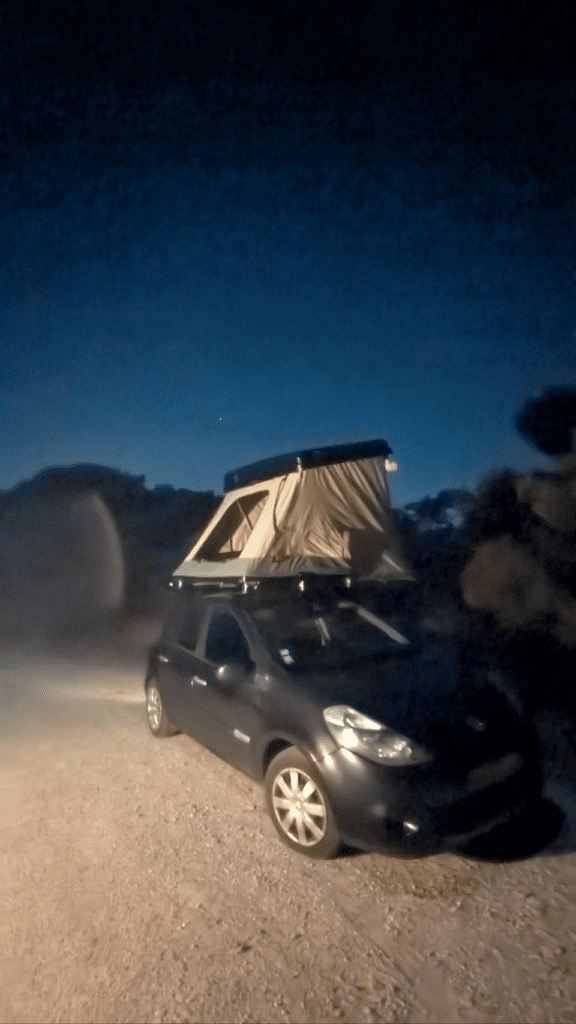
We eventually found a parking space in a cul-de-sac, just above the car park we'd found for the next day.
Objectively:
- not ideal,
- on the roadside,
- very exposed to the wind.
And a roof tent is nowhere near as discreet as a van.
The wind shakes the canvas non-stop.
In the distance, a beacon (or rotating light) gives the impression that a torch is approaching.
Every time you hear a noise, you think you're going to be evicted.
Result: a night from hell.
The connected watch didn't even detect sleep.
And that's saying a lot.
Clearly, in a roof tent, we absolutely do not recommend the wild bivouac on the Giens peninsula.
Day 2 - Porquerolles, disillusionment by bike and an improbable evening on the heights of Hyères
After an almost sleepless night on the Giens peninsula, the alarm goes off very (very) early.
The aim is to catch the first ferry to Île de Porquerolles at around 7.30am.
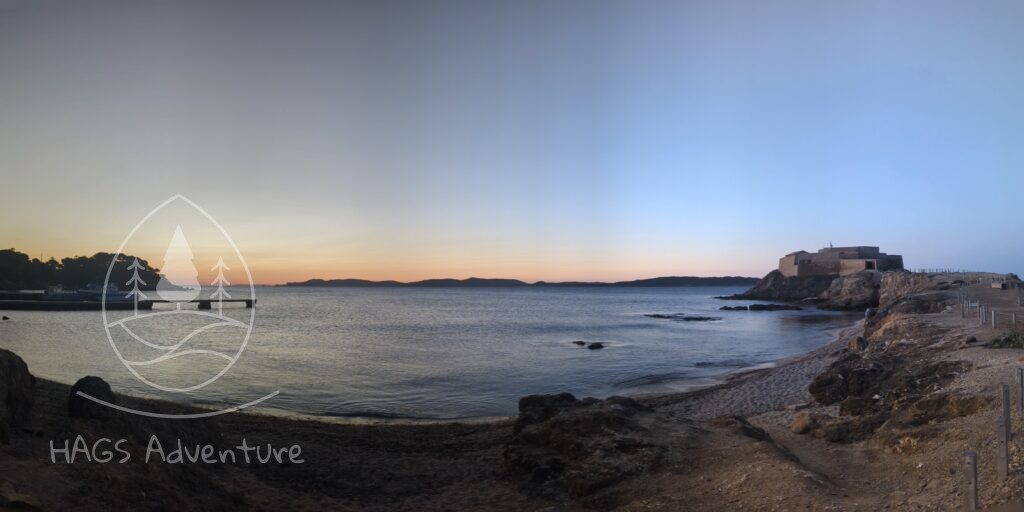
We decided to have breakfast directly on the island. And for once, the plan worked perfectly.
As soon as we arrived, we settled into a small village address (l'Arboursier): home cooking, quality products, fair prices, really friendly staff. So good that we went back for lunch. 👉 Clearly, a good address to recommend.
Cycling on the island of Porquerolles: the wrong idea
Porquerolles is sold everywhere as “the ideal island to discover by bike”. In fact, it's mainly a car-free island. There's a difference.
The roads are not tarmac. They are dirt tracks, sometimes stony, sometimes uneven, sometimes downright uncomfortable. They're totally unsuitable for mountain bikes. At the very least, you'd need a real mountain bike. And the hire company never told us that.
Online booking. On site, we were given a vague adjustment to the saddle, the handlebars were left alone (hello neck pain in the evening), a map of the island was handed to us and that was that. No advice on routes, no mountain bike recommendations given the state of the trails, no serious bike adjustments. Just “here's your bike”.
Quite honestly, the experience was a real disappointment.
I'm going to write a separate article on the subject because, in my opinion, Porquerolles needs to be cleaned up by bike. Yes, it can be done. No, it's not comfortable. And yes, it can clearly ruin part of the day.
Looking back, the island is much more pleasant to explore on foot. You move at your own pace, enjoy the scenery more, and above all avoid the torture of saddling up on bumpy paths at 30 degrees.
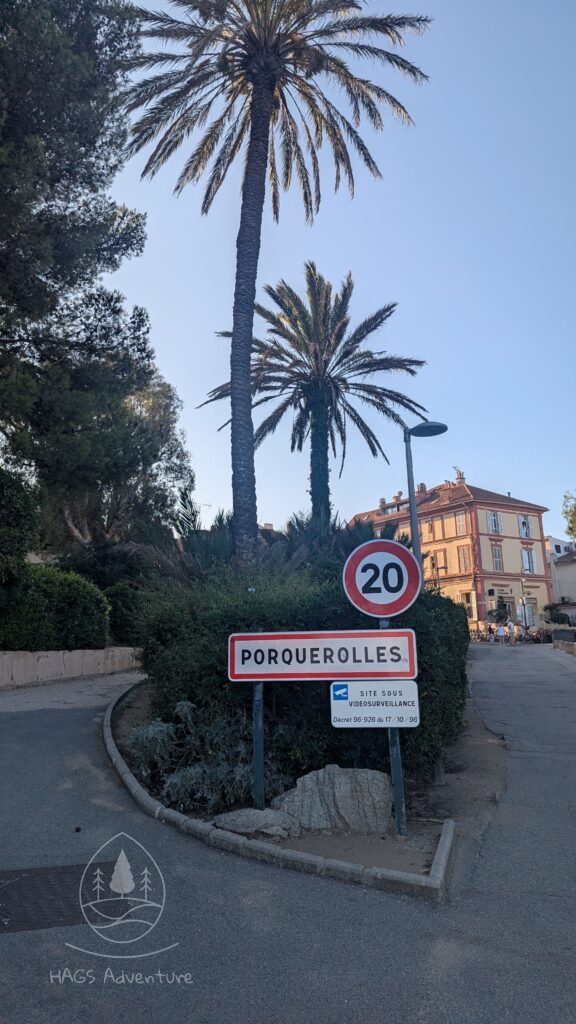
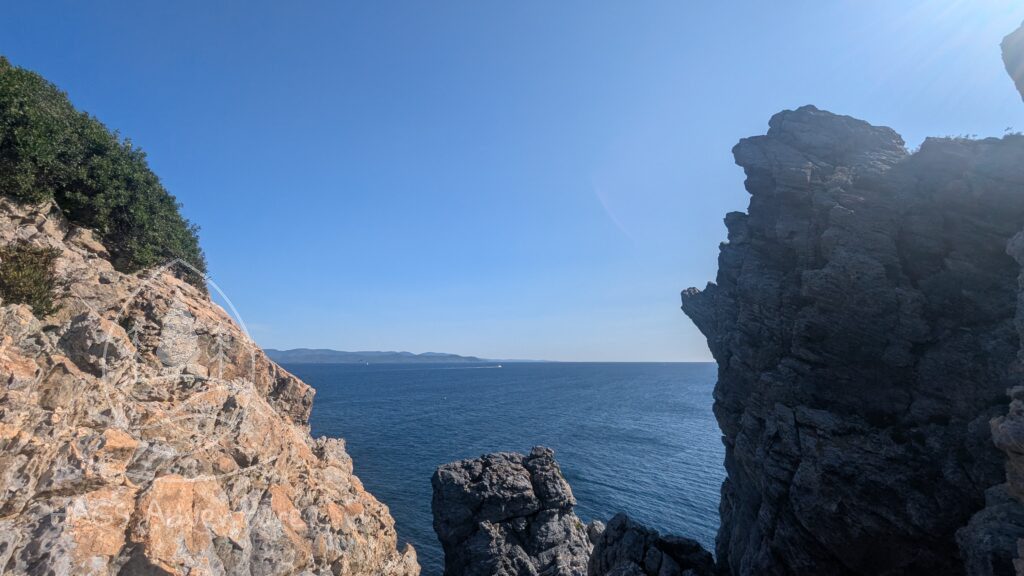
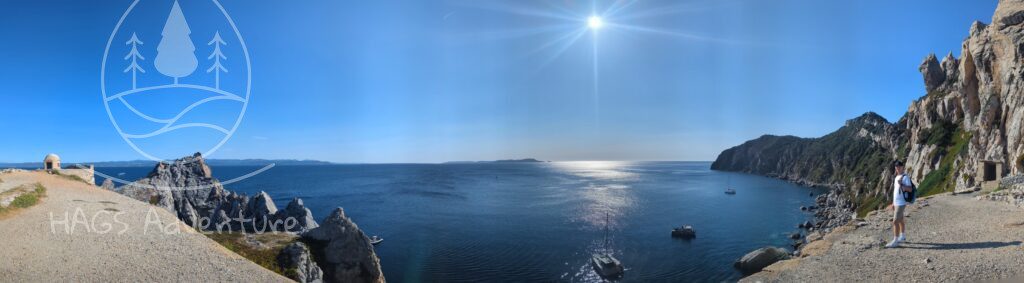

Magical mornings in the east, harsher afternoons in the west
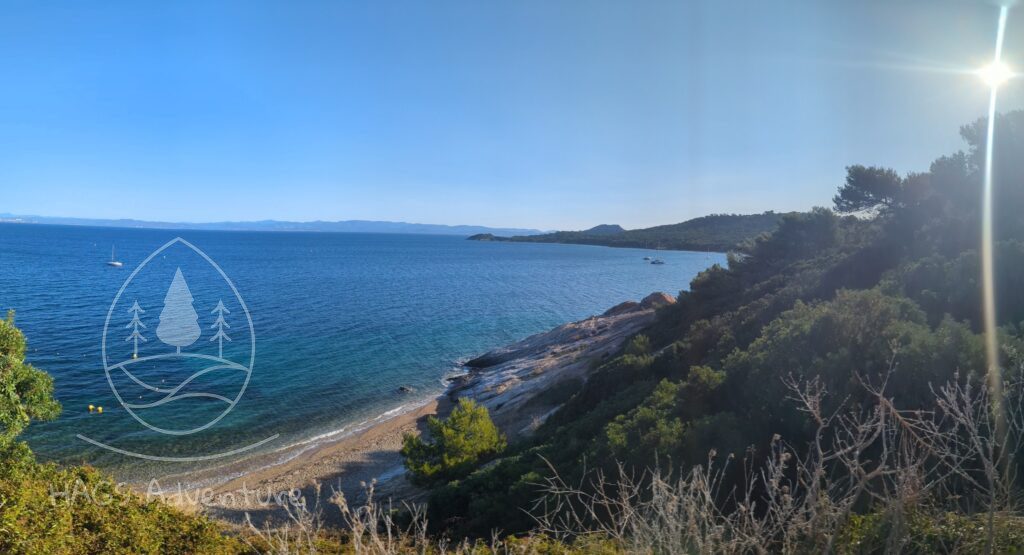
In the morning, we start by exploring the eastern part of the island. And there, it's sublime. Very few people (at the same time, it's early), magnificent light and almost total silence. You can really savour the moment. At this time of day, Porquerolles reveals all its charm.
Then comes the afternoon.
We tried to head west, but tiredness set in. The heat was rising, the legs were aching and the saddle was becoming a real pain because of the constant vibrations on the dirt roads. We didn't make it all the way to the west, simply because we didn't have the legs.
Above all, there's a clear difference in attendance. While the morning was almost intimate, the afternoon was already much busier. And yet we were out of season.
This experience confirms one thing: in the middle of summer, it must be a lot less pleasant.
Favourite and recommended bathing spot: the Calanque de la Galère. It's well worth the effort. Access is via a footpath, then a small forest path downhill. The descent is pleasant, almost playful. But don't forget that you have to climb back up again.
Back to the mainland and looking for a spot
At the end of the day, we took the penultimate ferry, completely exhausted by the heat and the bike. We headed back up to the heights of Hyères with two spots spotted on Park4Night. The first was already taken, so we tried the second.
A radically different atmosphere: the edge of a small road, and below... rubble, tiles and rubbish. Clearly an unauthorised dump. Not at all our usual style, but that evening we didn't have the energy to look any better. It's still hot, we're rinsed out, we just want to shower and get some sleep.
As if the day wasn't improbable enough, a little stray goat comes running around us. It was impossible to get it to leave. Luckily, some passers-by managed to pick it up.
And that's where we were pleasantly surprised.
We'd noticed that the Var has severe restrictions on unauthorised camping (large stones at the entrance to forest paths, blocked access), nothing like the more tolerant welcome in the Hautes-Alpes. So we were expecting some wary looks.
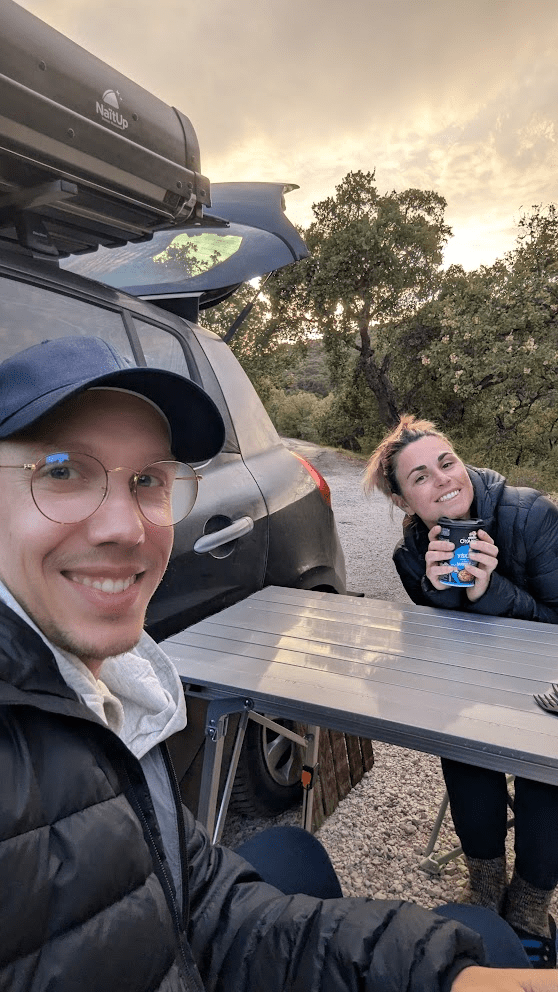
On the contrary, the evening strollers greet us with a smile and exchange a few words.
Day 3 - Rain, a shortened market and an early parking spot
Day 3 was forecast to be rainy. And for once, the weather forecast was right.
We start the morning at Hyères, The idea was to take a stroll around the market. The atmosphere was a bit grey, but we thought it might have its charm. In reality, we didn't have time to take advantage of it: the rain quickly came down and the market didn't make much of an impression on us. Nothing exceptional, and above all, it's hard to stroll around when you're soaking wet.
We took the opportunity to look for a fountain to refill our water tanks. We'd spotted several on apps like Freetaps. On the ground? All cut off. Not a drop. Many of the fountains were simply out of order. We finally found one in the old town centre, but of course access by car is complicated. One more constraint that confirms an impression already well established: here, everything seems designed to limit van life.
That said, this constraint at least allowed us to discover a little of the historic centre of Hyères. The narrow streets are pretty, the facades colourful and the Mediterranean atmosphere very much alive... even in the rain. It's easy to imagine how pleasant the place must be in the sunshine.
With heavy rain forecast, we prefer to play it safe and avoid potentially flood-prone areas. So we climb a little towards La Garde. A little shopping to keep you busy, lunch at the Buffalo Grill (We hadn't been there for ages).
But you soon get bored. The shops are packed, the atmosphere isn't very exotic, and the rain doesn't make you want to hang around outside.
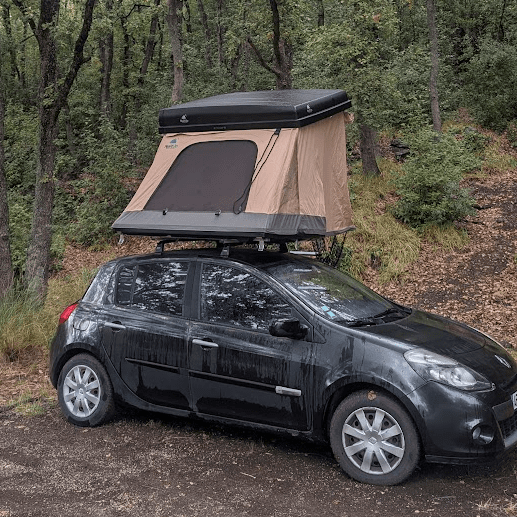
We arrive quite early. And this time, we don't even pretend to wait for nightfall. We're tired, a bit fed up with the weather, so we set up the tent in broad daylight. No spectacular sunset, no exploration on the agenda. Just a quiet late afternoon of reading, doing arrows, stretching out and letting time go by.
Clearly, it was a bit of an “off” day.
The next morning, the alarm was raised by... hunters. These gentlemen arrive to put up signs indicating that the hunt is starting and that there is literally a risk of being shot at. Atmosphere.
Day 4 - Breakfast by the sea, a hilltop village and the reality of bivouacking in the Var
After the early wake-up call imposed by the hunters, we quickly pack up camp and head off towards Saint-Mandrier-sur-Mer. This time, we're starting the day differently: breakfast by the sea.
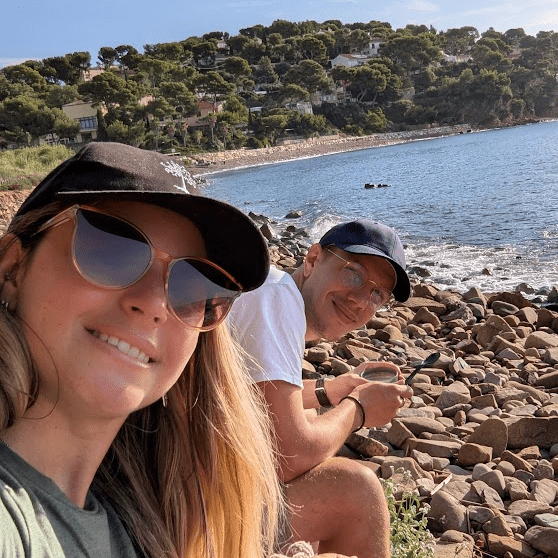
There's a free car park about 100-200 metres from the beach. We take out the stove, grab the bags and set up camp facing the water. Preparing your coffee with your feet almost in the water, in the calm of the morning, is exactly what we love about these road trips. Simple, but precious.
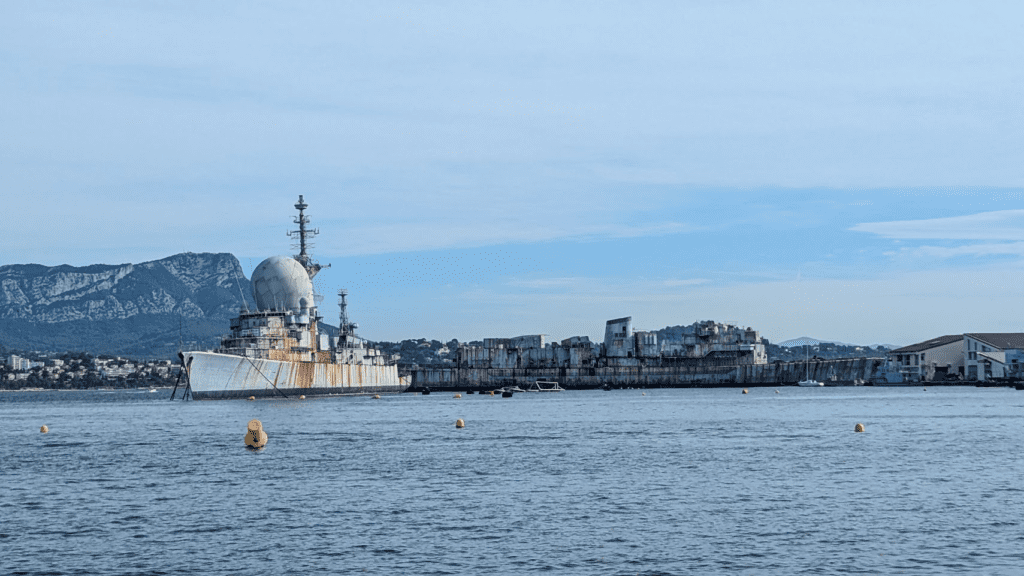
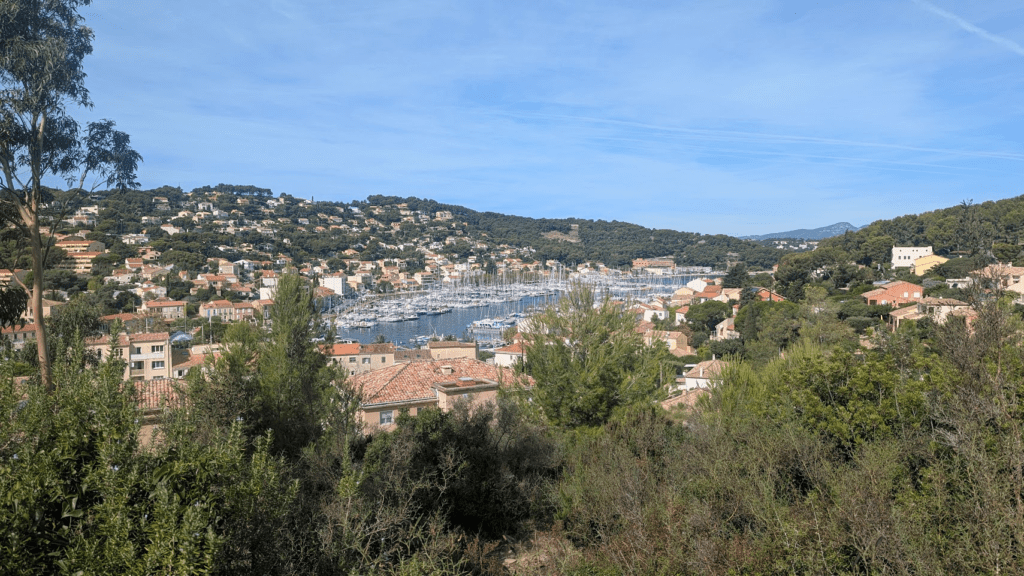
Then it's on to a stroll around the port of Saint-Mandrier. The atmosphere was gentle and the pace relaxed. We decided to go a little higher, following a geocaching trail. It's become a bit of a ritual: looking for a geocache often leads to discovering places you wouldn't have spontaneously explored. And indeed, the climb gives us a lovely view of the city and the harbour.
Then it's back down to a small restaurant by the harbour for lunch. Nice setting, pleasant moment, unpretentious but effective.
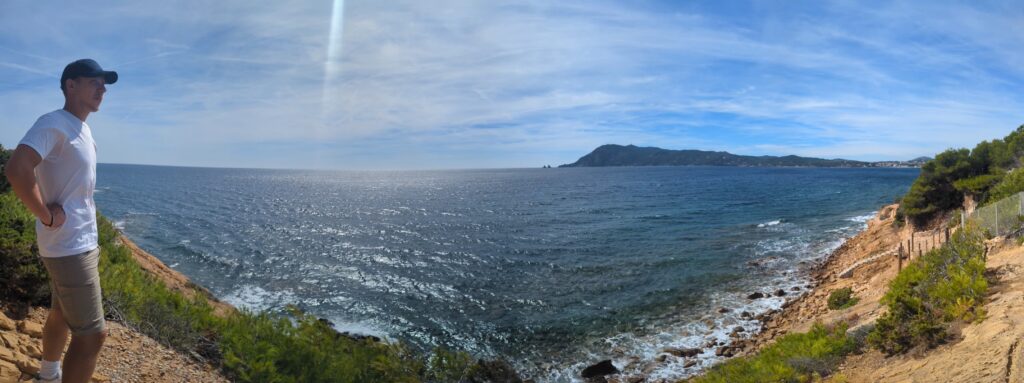
In the afternoon, we headed west from Saint-Mandrier along the coastal path, again following several geocaches. This makes for a nice loop, punctuated by views of the sea and the cliffs. It was probably one of the most harmonious moments of the trip: walking, nature, panoramic views, without crowds.
Le Castellet: medieval charm and complicated parking
The day doesn't end there. We get back in the car and head inland to visit Le Castellet, which we were strongly advised to do.
While free parking used to be fairly easy to find, here you have to pay for everything in the immediate vicinity of the village. Impossible to avoid. Eventually, we squeezed into a small alleyway a little way out of the way and found a free parking space. Out of season, it's fine. At the height of summer, it must be a different story.
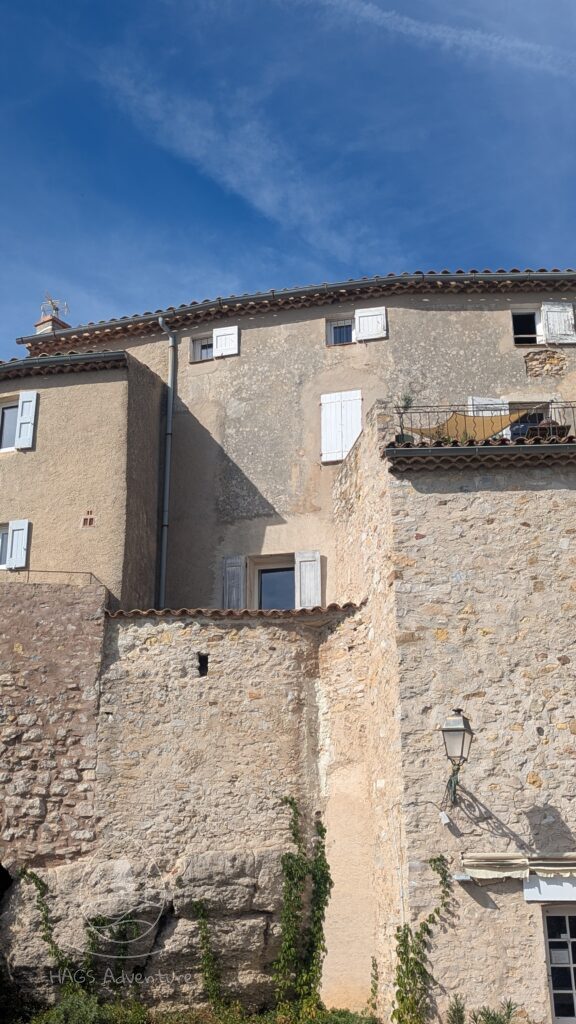
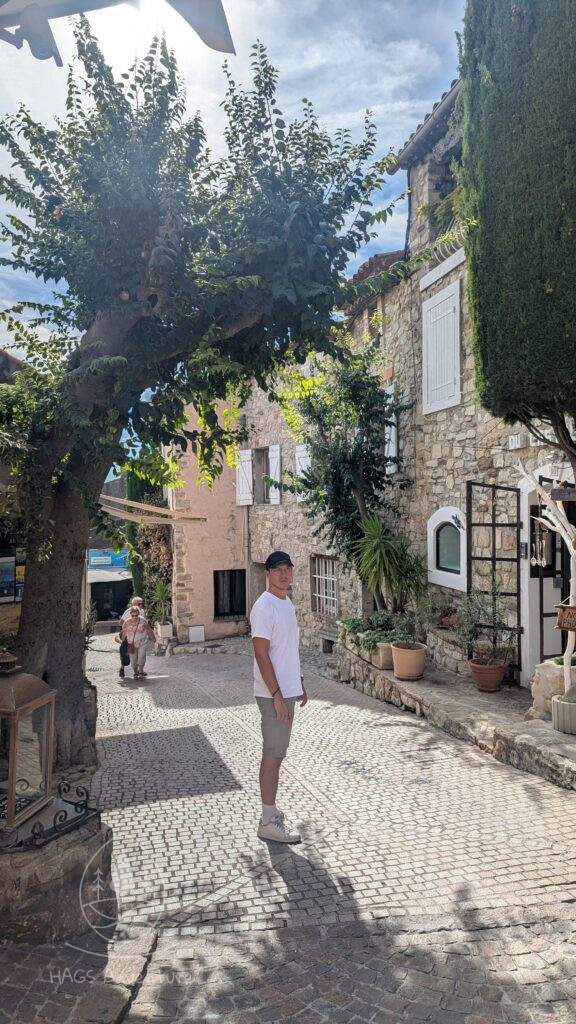
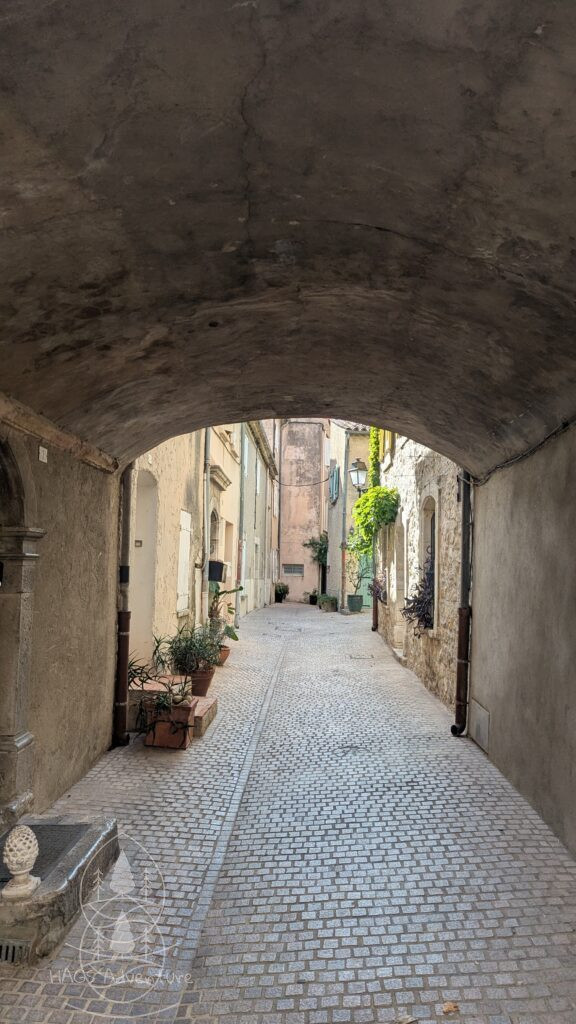
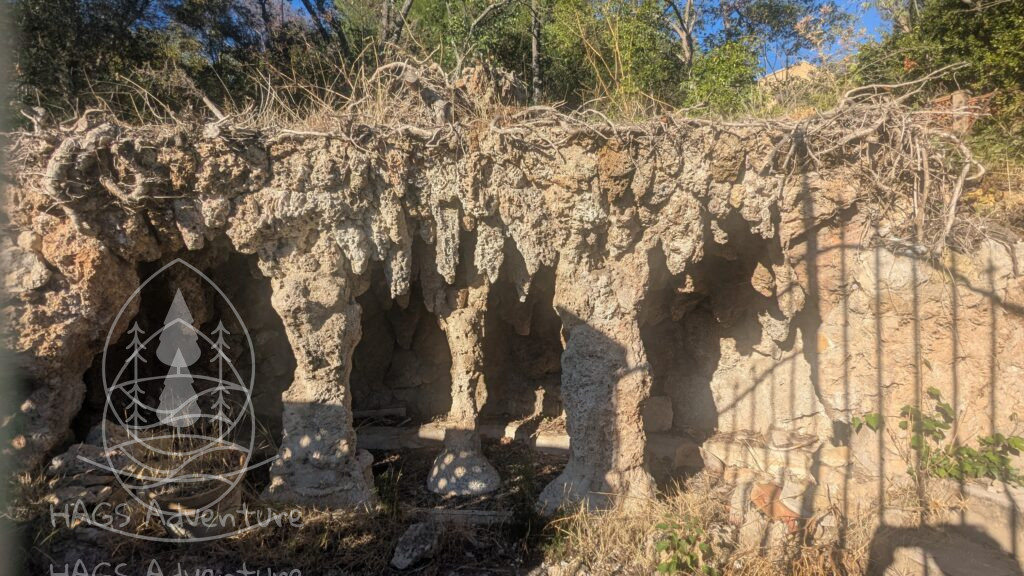
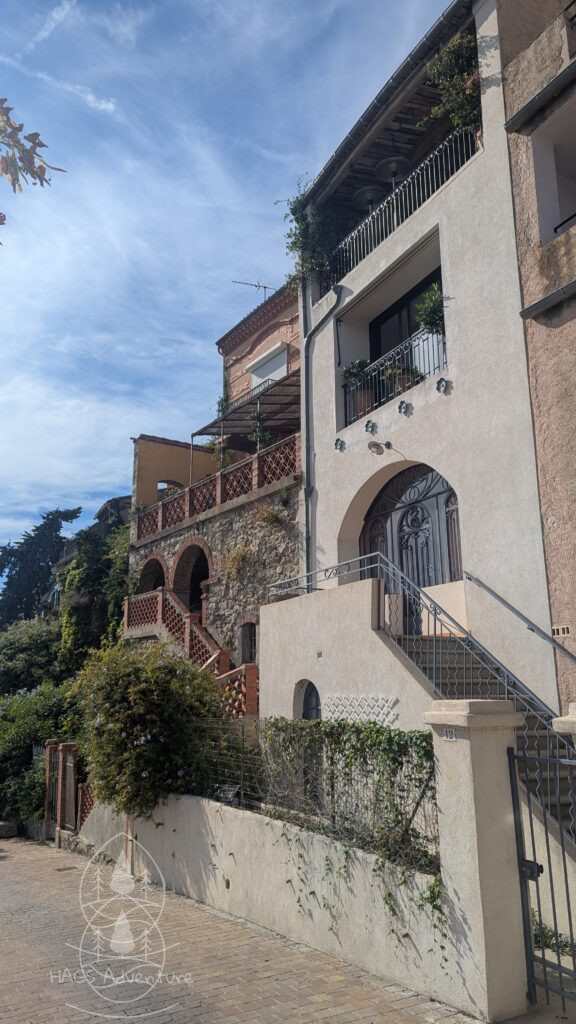
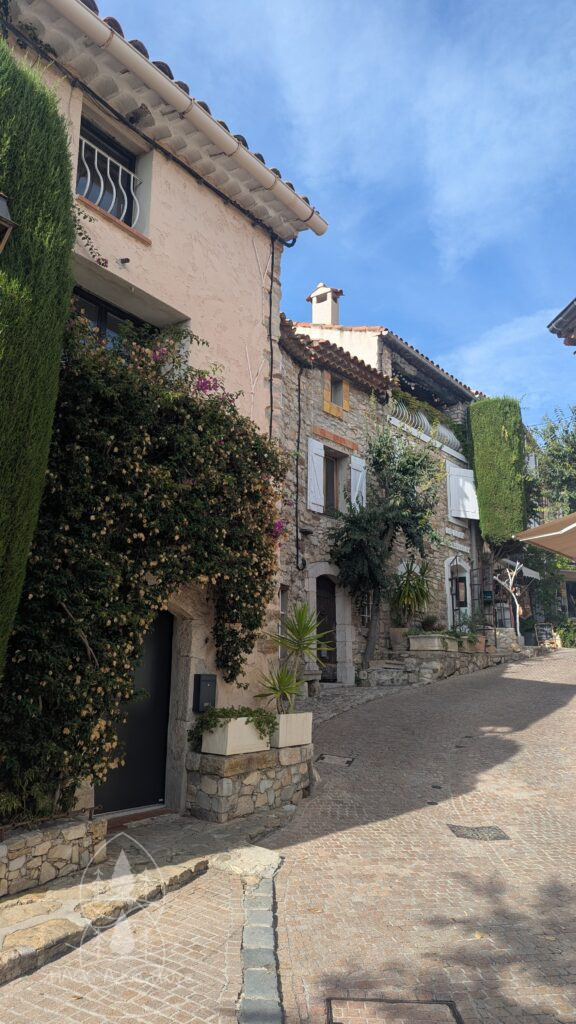
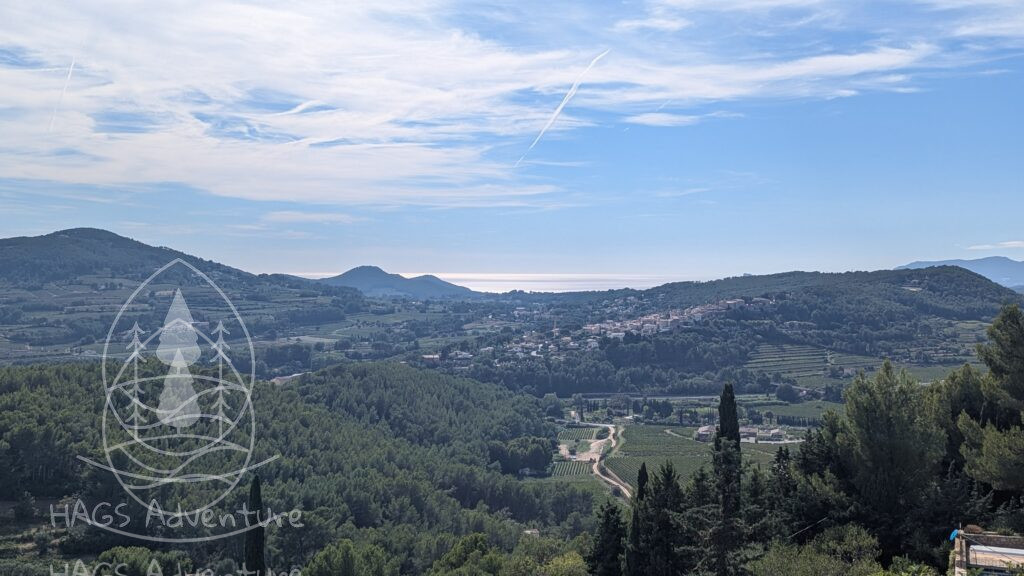
The village is really very pretty. Cobbled streets, stone facades, little shops and uninterrupted views of the surrounding hills. Even in early September, it's very busy. But it's a very small village: the slightest movement quickly gives an impression of bustle.
You stroll around for a while, soaking up the atmosphere, then come the question that comes up every night: where to sleep?
Google Maps vs. reality on the ground
After several average spots in the previous days, we thought we'd try another strategy: scouting on Google Maps, zooming in on the little paths that seem to go deep into the wilderness.
On paper, it looked promising. In reality, it was a total failure.
Every time we spot an interesting path, we come across the same obstacle: a large boulder placed at the entrance to block access. The département seems to have methodically closed off access to the forest paths. We kept turning for nearly an hour. Each attempt ended in a U-turn.
That's when you really realise just how restrictive the Var is when it comes to bivouacs.
We ended up settling on the only Park4Night spot in the area. We expected it to be packed. In the end, there's just a 4×4 with a roof tent and a van. We exchanged a few words. It's the first time we've shared a spot with other travellers.

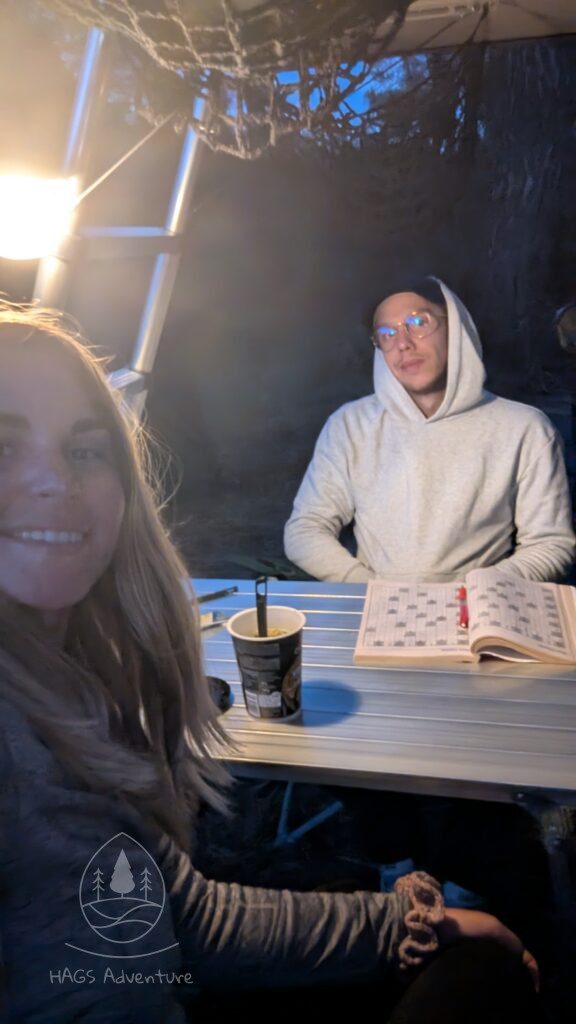
Rooftop tent vs. van: a wake-up call
This road trip makes us realise something important.
The Var is not suitable for bivouacking in a roof tent.
A van less than two metres long can fit into some seaside car parks and park relatively unobtrusively. With a roof tent, it's a different story. You're visible, you're taller, you attract attention.
In the mountains or in more isolated rural areas, a roof tent is perfect. By the sea, in a department where access is restricted and controls are stricter, it's much more complicated.
We also realise that we may be a little late in this wave of road trips and van life. The number of travellers has exploded in recent years. And unfortunately, not everyone respects their surroundings. Dirty spots, rubbish left behind... and in the end, it's those who follow who pay the consequences, with bans and blocked access.
It's a bit bitter to say the least.
We only managed to do wilderness on this trip. But clearly, it's not the ideal terrain for that. Day 4 was a wake-up call: for future road trips, we'll be focusing more on more natural, more rural areas, more suited to our way of travelling.
Day 5 - Saint-Cyr-sur-Mer, favourite beaches and the last night before Cassis
On this fifth day, we're heading for Saint-Cyr-sur-Mer. We parked near McDonald's, just over a kilometre from the beaches and port. It's not the ideal location, but we don't mind: walking is part of the journey (and above all, the car park is free!).
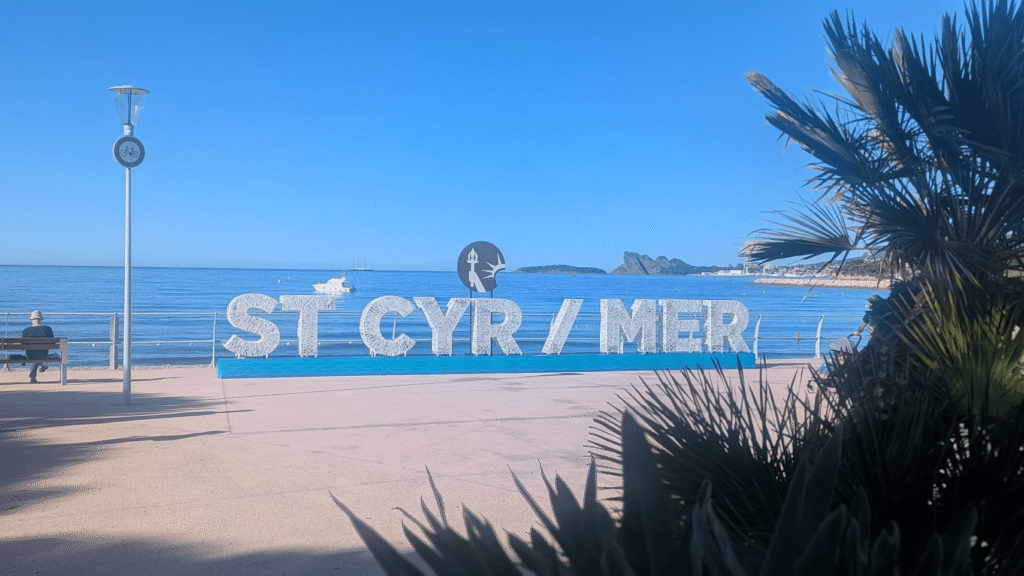
We skirted the seafront, made our way through the port, then headed back towards the town centre on a very specific mission: to find a printing press. Our word puzzle book had leaked the day before... and clearly, the end of the day without a grid to fill in just isn't the same. In the process, we discovered the small town centre, not particularly charming, but lively.
On the other hand, I've fallen in love with the beaches.
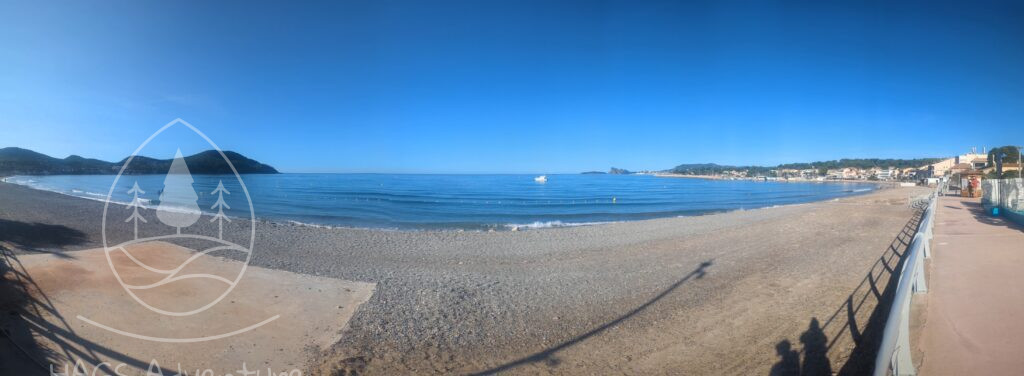
I hadn't been back to Saint-Cyr-sur-Mer since I was a child. And frankly, I loved it. Real swimming beaches. Sand, space, the chance to spread out your towel without struggling. No pebbles, no steep coves, no creeks where you're desperately looking for a flat spot. It may not be “wild” in the Instagram sense of the word, but it's exactly the kind of beach I like.
What's more, there really weren't many people there. The luxury of the off-season.
We have lunch in a restaurant by the sea, Le RestÔ. Home cooking, reasonable prices, lovely view over the water. A simple but effective address, which we recommend without hesitation for a lunch with your feet almost in the sand.
At the end of the afternoon, we hit the road again to find our spot for the night. This time, we didn't try to improvise like Google Maps. We went straight to a Park4Night spot we'd spotted in advance. The place was spacious and rather pleasant, with no-one there when we arrived.
We did notice that the ground had been turned over by wild boars looking for acorns. It wasn't exactly reassuring at the time, but we put it into perspective. A few hikers pass by at the end of the day, but the atmosphere remains calm.
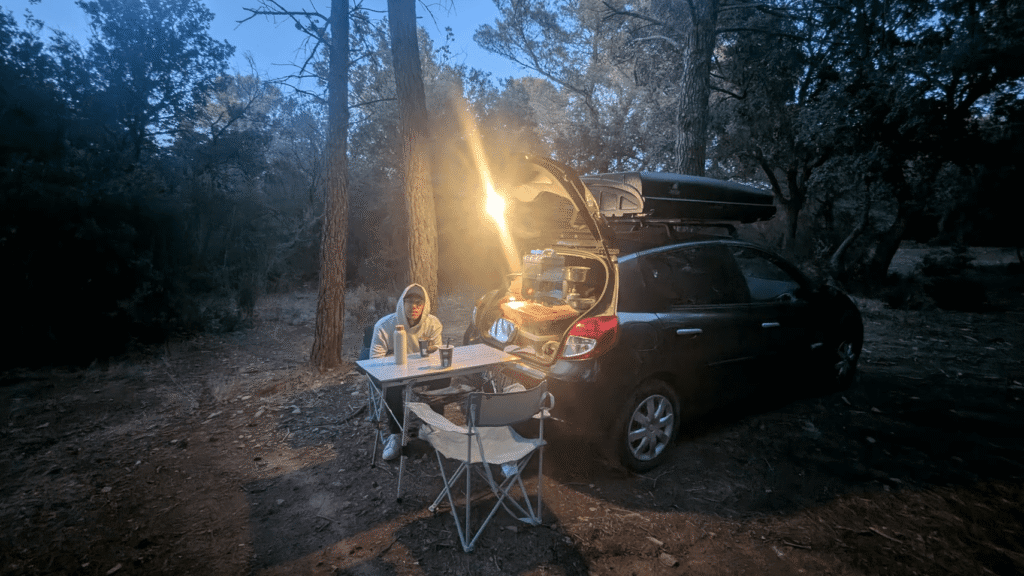
We settle down, take a shower, prepare some food and enjoy this last night before the return journey.
The following day, we plan to visit Cassis, A place we love, a place we haven't been back to for two or three years. A final interlude before returning home.
💸 Road trip budget - 5 nights / 6 days in Var Ouest
This is often the question we ask ourselves at the end: how much did it really cost?
Accommodation: €0
We only slept in wilderness bivouacs. So inevitably, the cost of accommodation was zero. That's one of the big advantages of travelling in a roof-tent: no camping, no hotels, no Airbnb.
But as we saw during our stay, free doesn't always mean easy, especially in the Var.
Food: the real boom item
Clearly, the budget that has gone up the most is food.
We “warmed up” to going to restaurants almost every day, as we had no Airbnb expenses. At the time, it was pleasant, practical and comfortable. But by the end of our stay, my stomach couldn't take it any more. Too rich, too frequent, not balanced enough.
Next time, we'll mix it up a lot more: a few well-chosen restaurants, and above all picnics, simple meals, salads and local produce. That'll cut the budget down considerably... and it'll be good for the body too.
Petrol
The second major item was fuel for the 612km roadtrip.
The Var isn't huge, but we did move around quite a bit between the coast, the islands and the hinterland, and just the journey to and from home. Petrol is obviously a significant part of the budget.
Activities
As far as activities are concerned, we've kept things very reasonable.
Boat ticket for Island of Porquerolles cost €48.
Hire of two bicycles for the day is approximately €34.
These were the only paying activities on the trip. The rest was walking, geocaching, coastal walks and village visits. In the end, the best moments cost nothing.
Toll
We chose to take the motorway there and back, so as not to add hours to the journey between home and the Var.
Yes, it figures quickly.
But it almost halves the journey time. And over a six-day stay, the time saved is invaluable.
🧾 Total: €647 for 5 nights / 6 days for two people.
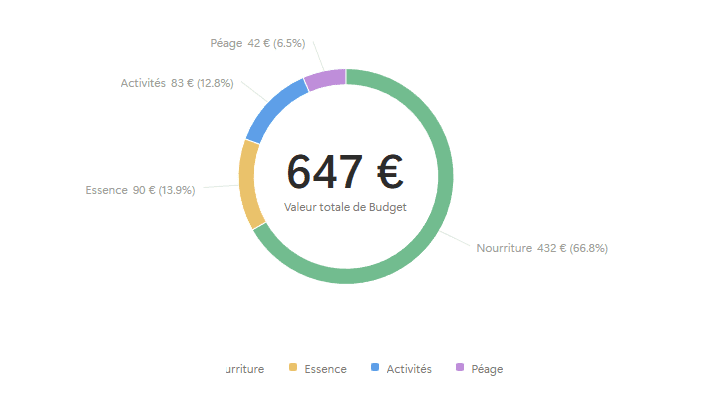
And clearly, it's the restaurants that are blowing the budget. Without that, the trip would have been much more economical.
What we remember
A road trip can be very affordable if you cook more, limit the number of restaurants and choose your paid activities carefully.
In our case, the free accommodation more than made up for the excesses on the plate.
And for future trips: more simplicity, more picnics, and fewer temptations on the terrace.
Conclusion - A full-scale test
This road trip in the Var was a real test. Not just a seaside interlude, but a real experience over several days, which enabled us to see what works... and what doesn't.
We're really pleased to have experimented with the roof tent over a slightly longer period. Two or three nights is not enough time to draw conclusions. This time, over almost a week, we were able to measure the real constraints: parking, blocked access, visibility, stricter regulations on the coast.
And the conclusion is quite clear: the Côte d'Azur (and probably the west coast too) are not suited to our way of travelling in a roof-tent. At least not in wild 100 % mode. Unless you book campsites in advance, which completely changes the philosophy of the trip.
On the other hand, for more rural, more mountainous and more tolerant regions, the roof tent remains a great option. It's more suited to natural environments where you can find discreet spots without constantly looking for a solution.
This trip also gave us another opportunity to try out our organisation and equipment. And in that respect, we're quite satisfied. The equipment is well optimised and the layout is efficient. As we had planned to do a lot of restaurants, we hadn't taken a cool box, which freed up space in the car and simplified the logistics.
In short, this road trip didn't make us abandon the idea of travelling in a roof-tent. Above all, it enabled us to refine our way of doing things. And sometimes that's exactly what we need: to test, adjust and understand... before setting off again.